
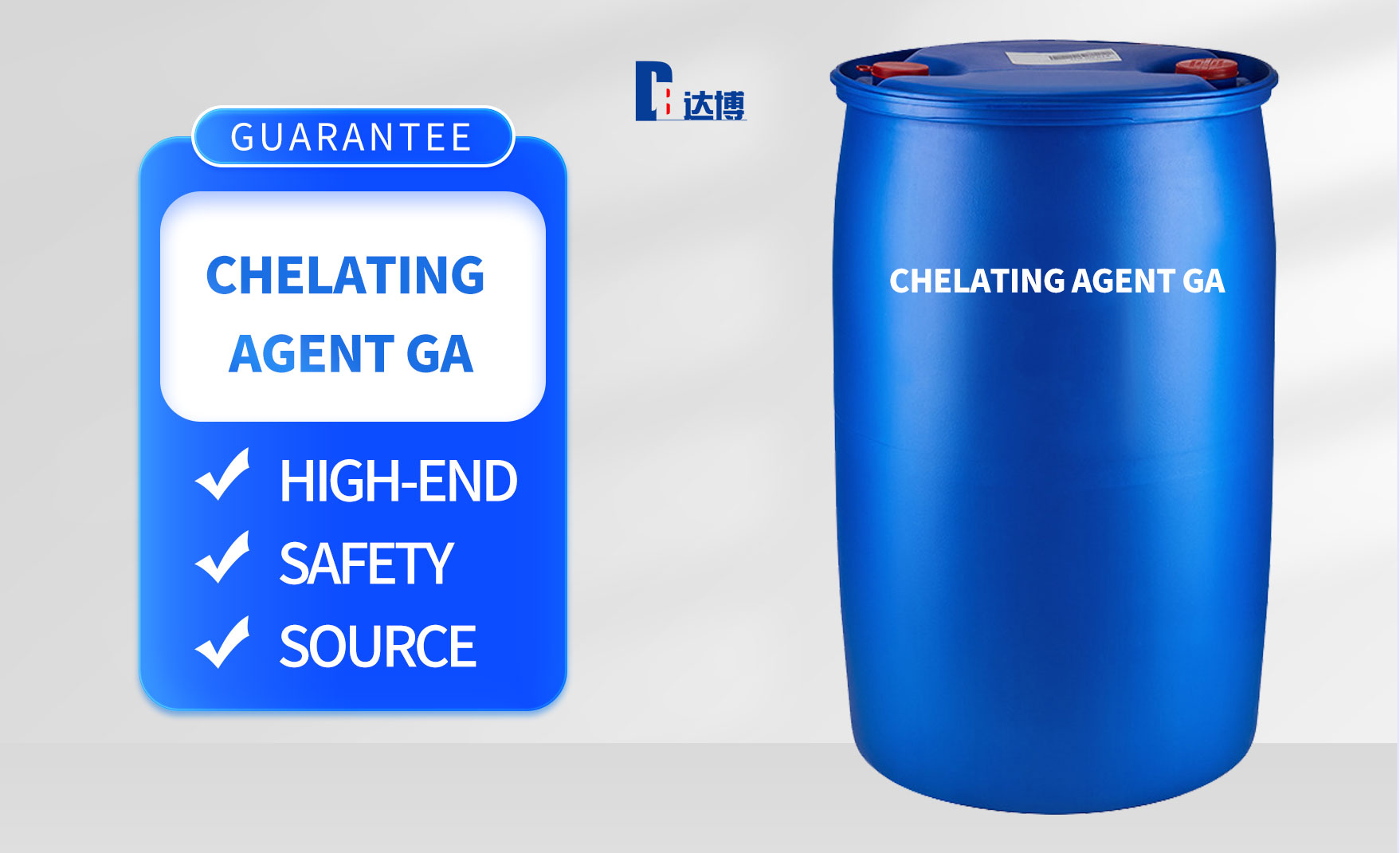

Product Description
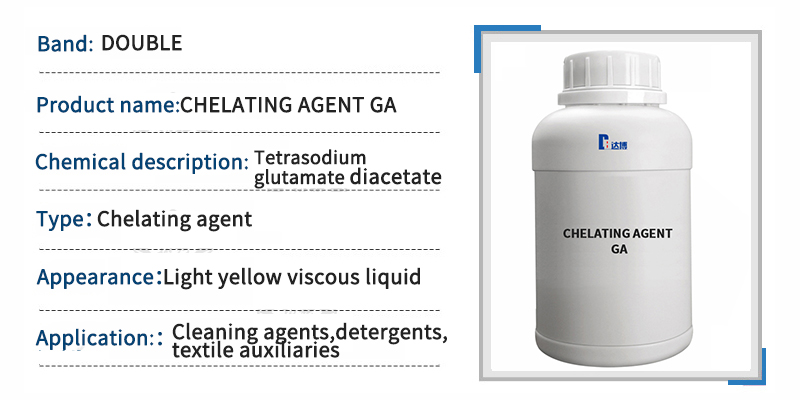
Physical and chemical properties
Product Name: Chelating Agent GA GLDA-NA
Brand: DOUBLE
Chemical Description: Glutamic acid dicarboxymethyl tetrasodium
Total solids content: 65%
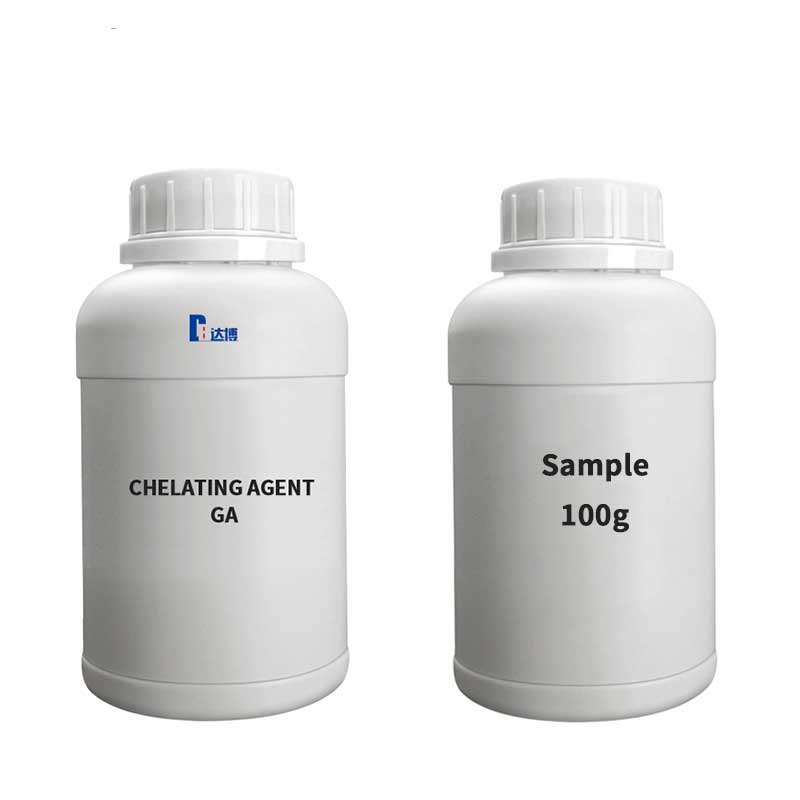
Product real picture
Product features
Chelating agent GAGLDA-NAChinese name Glutamic acid diacetate tetrasodium, molecular formula: C9H9NO8Na4, also known as glutamic acid dicarboxymethyl tetrasodium, CAS No: 51981-21-6. GA is a new green degradable chelating agent to replace traditional phosphonates, EDTA, NTA. The product has a wide pH range, high solubility, high temperature resistance, strong decontamination ability, no ecological toxicity, synergistic effect with fungicides, and no irritation to skin and eyes. GA conforms to the A list of safe detergent raw materials (ingredients) for food.
1. High solubility GA at wide pH has good solubility in strong acid to high alkali systems, and has better advantages for formulating formula systems with high active ingredients and low water content. For example, in high alkali systems in industrial cleaning, acid cleaning systems and high concentration systems have very good solubility.
2. Good high temperature stability. Through thermogravimetric analysis, GA was tested at 170 ° C for 6 hours or at 150 ° C for a week. GA did not decompose and was extremely stable. Compared with other chelating agent products at 100 ° C, it performed best.
3. Strong chelating ability. For formulations, it is very important to choose a chelating agent with sufficient chelating ability. The chelating ability is related to the pH value of different metal ions and systems. For the binding force of specific metals, we can see from the stable equilibrium constant. At the same time, GA will have a good effect on a variety of difficult-to-clean calcium scales or equipment that is not easy to clean.
4. It has antiseptic and bactericidal effects. Because GA has natural amino acid components, it has a stronger binding ability with animal cell walls, which can effectively destroy the electrolyte balance of cells and inhibit cell activity, thus playing a role in antiseptic and synergistic effects. After experiments, we found that GA has obvious antiseptic and bactericidal effects in many fungicides, which can save 20% -80% of the usage. For example, we used a preservative - imidazolidinyl urea and GA to observe its bactericidal effect on Pseudomonas aeruginosa. The results showed that after compounding with GA, the usage could be reduced by 50%.
5. Meet the A list of food safety detergent raw materials (ingredients).
Application field
Cleaning agent
detergent
Textile auxiliaries
Daily chemical products
Oilfield water treatment
Pulp and paper additives
Food detergent
Metal surface treatment, etc
Specifications and Storage
Sealed and stored in a dry and ventilated warehouse to avoid mixing with acidic and odorous items to prevent sun and rain exposure.
Dangerous goods grade
Classification and labeling in accordance with relevant transport and hazardous substances regulations
Storage, protective measures and handling
Measures to prevent accidents and fires
Toxicity and ecological effects